Rosenfeld Media
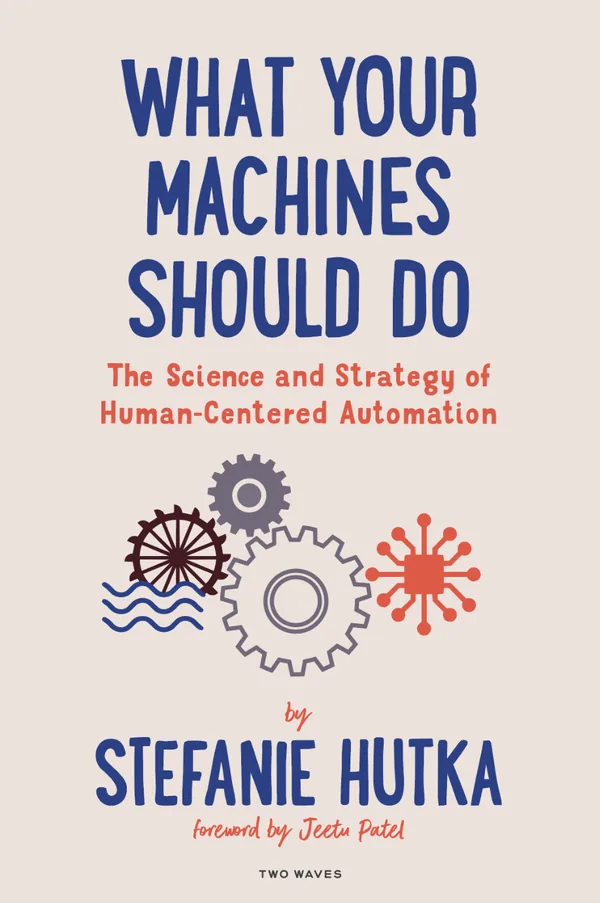
What Your Machines Should Do
The Science and Strategy of Human-Centered Automation
Stefanie Hutka. Paperback and ebook. November 10, 2026.
AI is just automation’s latest chapter—yet too many organizations chase fully automated futures untethered from readiness and customer value. What Your Machines Should Do closes that Automation Strategy Gap. Stef Hutka draws on decades of lessons from human factors, HCI, cognitive science, and systems thinking to help you automate with intention: setting deliberate direction, sequencing rollout, and making grounded day-to-day decisions.
Code HUTKA-SUBSTACK is 20% off at Rosenfeld Media through December 12, 2026.
- Paperback288 pages · ISBN 978-1959029441
- EbookISBN 978-1959029847
- PublishedNovember 10, 2026
- PublisherRosenfeld Media
An insightful, grounded guidebook to harmonizing human cognition with AI.
Readers
Who it’s for
Rosenfeld Media describes the reader as a design or product decision-maker navigating AI automation:
- Individual contributors looking to manage up, helping your team build a practical feel for what the technology can actually do.
- Managers guiding a team’s day-to-day automation choices, deciding what to build, what to adopt, and what to keep human.
- Senior leaders working to align technical capabilities with customer and business value.
From the book
What you’ll take away
- Prioritize what and how to automate by weighing customer value, organizational readiness, and technical maturity.
- Build intuition about what the technology can and cannot do through hands-on activities.
- Evaluate the value of an automation solution across its user, task, and ecosystem layers.
- Map the beliefs that drive your organization before automating, because automation accelerates the system you already have.
- Reinforce your strategy through automation, rather than letting automation become the strategy.
- Anticipate the consequences of automation decisions to mitigate risk and surface opportunity.
- Design automated systems that expand cognition.
- Evaluate automated systems, before and after they ship.
Eleven chapters
Contents
Rosenfeld Media: the book moves from mindset to method across 11 chapters, starting with why intentional automation matters, through frameworks like the Autonomy Decision Matrix and building “could we / should we” judgment, into setting direction, anticipating consequences, and finally evaluating and adapting your systems over time.
- 01Dreams of Automated Futures
- 02The Autonomy Decision Matrix
- 03Could You Automate?
- 04Should You Automate?
- 05Seeing the System
- 06Reinforcing Strategy Through Automation
- 07Anticipating Automated Futures
- 08Thinking With Technology
- 09Designing Iron Man Suits
- 10Evaluating Automated Systems
- 11Toward Humanist Automation
Read chapter 1 on Rosenfeld Media. Chapter 6 is also excerpted on the book page.
Praise
“Despite our general eagerness to increasingly automate our work and lives, the future of human potential requires us to do more of what humans can uniquely do. In an era of cognitive offloading, Hutka’s timely book illustrates the costs, the opportunities, and the necessity of cognitive expansion.”
Scott Belsky
Founder of Behance, author of The Messy Middle“In this timely guide for product leaders, Hutka shows that the shortest path to choosing what to automate is the most intentional one.”
Kimberley Peter
Director of Design Research + Activation, RBC, and co-founder of The Banking on Impact Project“The gap between automation’s promise and its payoff is a people gap. This book provides the practical guidance needed to close it, grounded in decades of sociotechnical research.”
Dustin Kiskaddon, PhD
VP, experience research, JPMorgan Chase, and author of Blood and Lightning: On Becoming a Tattooer“As AI promises the automation of everything, everywhere, all at once, this book represents a timely and highly practical guide to adopting more deliberate and humanistic automation strategies and practices.”
Simon Roberts
Founder, Stripe Partners, board president of EPIC, author of The Power of Not Thinking: How Our Bodies Learn and Why We Should Trust Them“This book puts current discussions about AI into human, social, organizational, and historical context using rich and compelling examples that help readers understand how human choices about automation echo across technologies and sectors. Hutka makes crystal clear the case that AI strategy is human strategy first and foremost and provides concrete approaches for navigating strategic choices about automation.”
Eric T. Meyer
Dean & Chancellor’s Professor of Social Informatics, School of Information, University of California, Berkeley“A delightful, surprisingly refreshing read on one of the hardest questions in tech. Stef synthesizes her hard-won experience in cognitive science, human-centered design, and strategic thinking into something rare—a clear, human framework for automating with intention, at a time when most of us are either paralyzed or rushing headlong into full automation. She takes tools we already trust—from UX, systems thinking, strategic foresight—and places them exactly where we need them most: the still-uncharted territory of AI strategy. A must-read for product designers, PMs, business strategists, and frankly anyone trying to tame the AI beast.”
Tatjana Dzambazova
Head of AI at Motif; formerly Emerging Technology PM, Autodesk, IDEO alumni“What Your Machines Should Do cuts through the pressure to automate for automation’s sake and offers something rarer: a clear-eyed, human-centered roadmap for deploying technology that actually works alongside people, not just around them. Through real examples of automation done right (and badly wrong), expert testimonials, and universally applicable frameworks you can put to work immediately, Stefanie shows why the question was never whether to automate, but how. Sharp, witty, and grounded in lived experience, this is equal parts an indispensable manual and a genuine page-turner!”
Angela Kochoska, PhD
Research scientist, IDEO“What an incisive and timely book! It’s simultaneously a thoughtful strategic guide on how to think broadly when deploying AI in organizations and a tactical manual grounded in real cognitive science (with the bibliography to prove it) for how to deploy AI tools that extend people’s capabilities, instead of trying to replace them. It doesn’t just focus on the AI models of the moment or whatever use of AI is in vogue today. Instead, it shows readers how AI tools extend how they think, rather than just automating workflows. Readers get a lasting framework for how to incorporate AI into their work and how to identify when new product hype won’t be successful, regardless of what new capabilities AI develops in the future.”
Mike Kuniavsky
AI CAD startup founder, co-author of Observing the User Experience, founder of Sketching in Hardware, formerly head of design, Xerox PARC“Human flourishing depends on leveraging advanced technology. Stef Hutka cracks the code on automation to ensure that we get our priorities straight.”
Harry Max
Executive director, Peak Priorities LLC, and author of Managing Priorities“Automation is on leaders’ minds today, but many organizations are reacting to hype rather than strategic intent. What Your Machines Should Do is a timely and practical antidote to AI FOMO. It doesn’t just explain how to automate, but what to automate and why so your organization can create long-term value while furthering human goals.”
Jorge Arango
Co-founder, Unfinishe_, and author of Living in Information and Duly Noted“History is full of attempts to improve productivity that delivered far less than promised. What Your Machines Should Do explains how to avoid repeating those mistakes, combining practical guidance with insights grounded in rigorous empirical research. Essential reading for anyone building, deploying, or working with AI today.”
Michael Joffe
Global marketing leader, Google; adjunct faculty, New York University; author of Smarter Together: How We Think, Feel, and Decide with AI
Stefanie Hutka
About the author
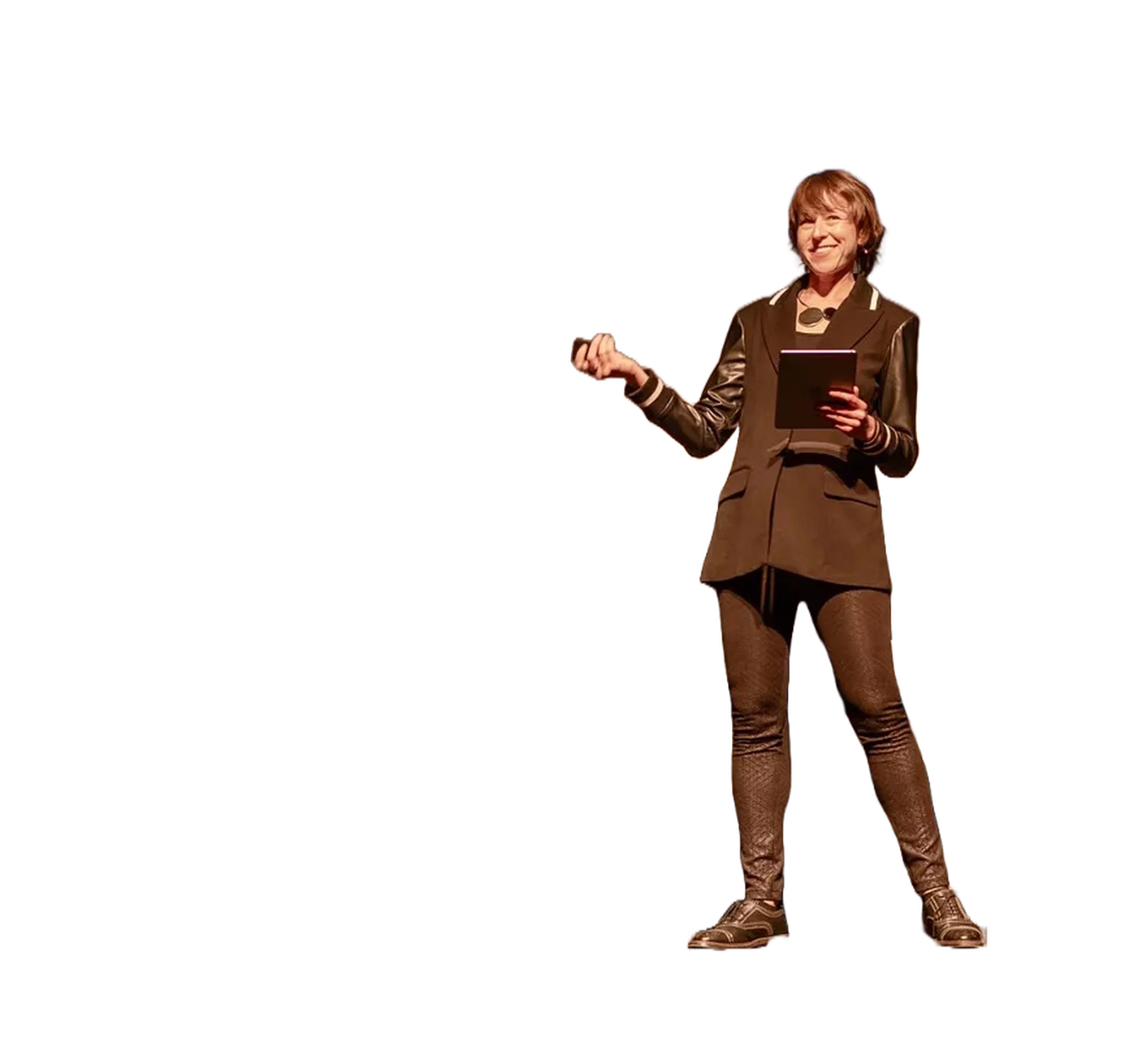
Stefanie Hutka, PhD, founded Sendfull in 2023. She holds a PhD in Psychology from the University of Toronto, focused on cognitive neuroscience, and has led research for 0-to-1 launches including Adobe Aero, the Adobe Substance 3D Suite, and Meta Quest 3.
She teaches at UC Berkeley’s School of Information and the Jacobs Institute for Design Innovation. More about Stef.
Get the book
Paperback and ebook from Rosenfeld Media. Code HUTKA-SUBSTACK is 20% off through December 12, 2026.
Buy from Rosenfeld MediaBook a call
A 30-minute scoping call.
Book a call